
Pediatric Basic Life Support (BLS) is a critical set of interventions aimed at maintaining airway patency and supporting breathing and circulation in infants and children experiencing life-threatening emergencies. Unlike adults, children have unique physiological needs, and knowing how to respond appropriately can make the difference between life and death. Prompt and effective BLS can significantly improve outcomes in pediatric cardiac or respiratory arrest situations. This guide outlines the essential steps and considerations for performing BLS on infants children aged 1 year to puberty.
Pediatric Basic Life Support: Guide to Saving Young Lives
While the fundamental principles of BLS are consistent across age groups, there are notable distinctions when dealing with pediatric patients:
- Compression Depth and Technique: For children, compress the chest approximately one-third the depth of the chest, about 2 inches (5 cm). Depending on the child’s size, this may require one or two hands.
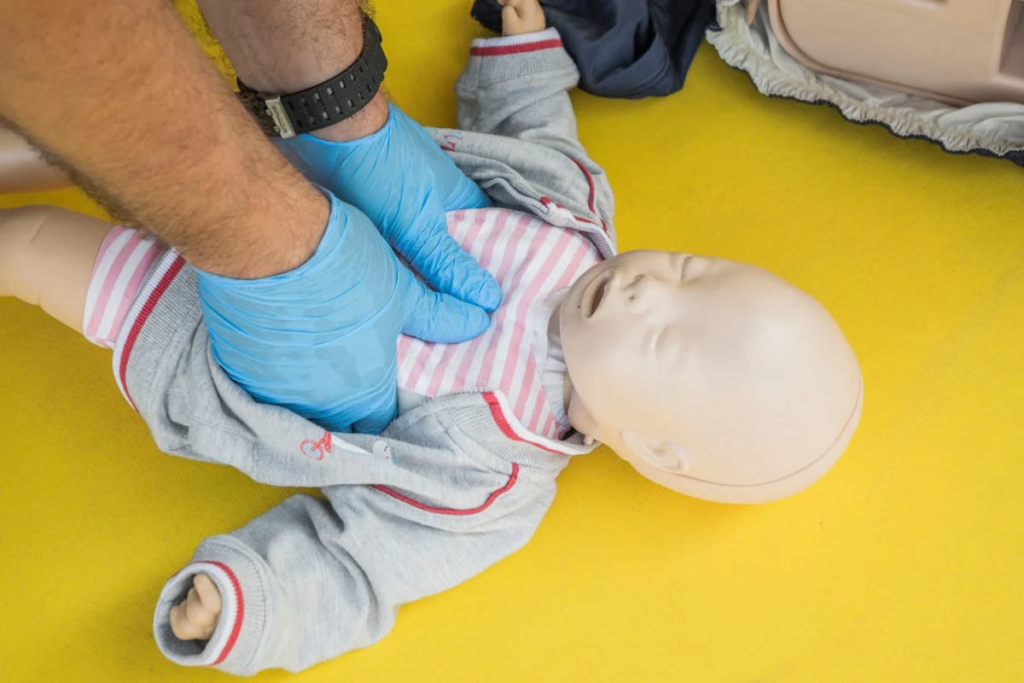
- Compression-to-Ventilation Ratio:
- Initial Rescue Breaths: In pediatric cases, it’s recommended to deliver 5 initial rescue breaths before starting chest compressions, especially if the arrest is likely due to hypoxia (e.g., drowning).
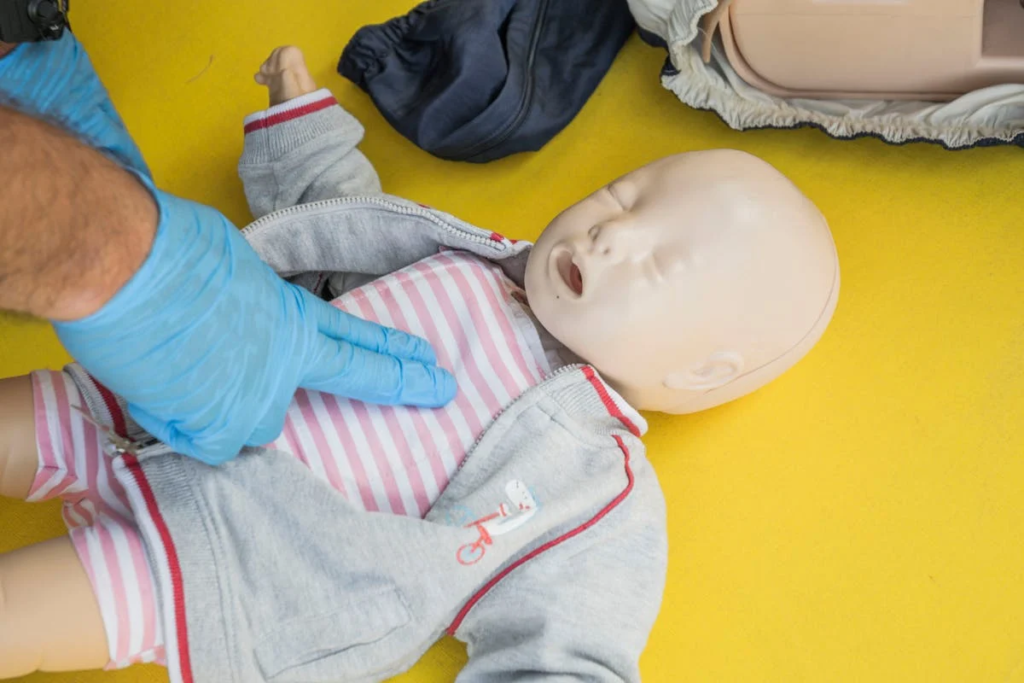
Pediatric BLS Sequence
- Assess Responsiveness: Gently tap the child and shout to determine if they are responsive.
- Activate Emergency Response ACT: If unresponsive and you are alone without a mobile phone, provide 2 minutes of care, then leave the child to activate the emergency response system and retrieve an AED if available. If someone is with you, have them call for help and get the AED immediately.
- Check Breathing and Pulse:
- Breathing: Look for no breathing or only gasping.
- Pulse: Check the carotid or femoral pulse for no more than 10 seconds.
- Begin CPR if No Pulse or Pulse <60 bpm with Poor Perfusion:
- Compressions: Place the heel of one or both hands on the center of the child’s chest. Compress at a rate of 100–120 per minute, allowing full recoil between compressions.
- Ventilations: After 30 compressions (15 if two rescuers), open the airway using a head tilt-chin lift and deliver 2 breaths, each over 1 second, watching for chest rise.
- Use of AED: As soon as an AED is available, turn it on and follow the prompts. Use pediatric pads if available; if not, adult pads can be used. Place one pad on the chest and the other on the back if pads risk touching each other.
- Continue CPR: Resume CPR immediately after any AED shock, continuing until advanced life support arrives or the child shows signs of life.
Special Considerations
- Foreign Body Airway Obstruction: If a child is choking and becomes unresponsive, initiate CPR, checking the mouth for obstructions before each set of ventilations.
- Advanced Airways: If an advanced airway is in place, provide continuous compressions at a rate of 100–120 per minute without pauses for breaths. Give 1 breath every 2–3 seconds (20–30 breaths per minute).
- Rescue Breathing: If the child has a pulse but is not breathing adequately, provide 1 breath every 2–3 seconds (20–30 breaths
Why Training Is Essential
While this blog provides an overview, hands-on training is critical. Pediatric BLS courses, like those offered by the AHA or Red Cross, teach you how to adapt techniques to a child’s size and recognize when something’s wrong. Practice builds muscle memory, so you’re ready when it counts.The thought of a child in distress is frightening, but preparation turns fear into action.
Pediatric BLS isn’t just a skill; it’s a gift of readiness.