
work together effectively during critical events.
What is ALSO?
Developed by the American Academy of Family Physicians (AAFP) in 1991, the Advanced Life Support in Obstetrics (ALSO) course is a highly structured, two-day program that combines didactic lectures with hands-on training using lifelike mannequins. The course covers key topics such as:
- Assisted Vaginal Delivery
- Management of Postpartum Hemorrhage
- Neonatal Resuscitation
- Fetal Monitoring and Dystocia Management
ALSO emphasizes a team-based, standardized approach that equips physicians, certified nurse midwives, registered nurses, and other providers with the evidence-based skills necessary to manage obstetric emergencies. Numerous studies have shown that ALSO not only increases provider knowledge and skills but also boosts confidence in managing critical situations—a factor that can ultimately lead to improved maternal and neonatal outcomes.
Introducing BLSO
Complementing the comprehensive training provided by ALSO is Basic Life Support in Obstetrics (BLSO). While ALSO is aimed at providers who regularly manage obstetric emergencies, BLSO is tailored for those who encounter deliveries infrequently—such as prehospital care providers, first responders, and certain medical or nursing students. BLSO focuses on:
- Standardizing Basic Obstetrical Skills
- Managing Routine Deliveries
- Initial Response to Obstetric Emergencies
The streamlined one-day BLSO course uses similar hands-on methods and simulation exercises as ALSO but is designed to be more accessible for individuals whose primary role may not involve regular obstetrical care. This ensures that even in resource-limited settings or rural areas, the first responders are well-prepared to manage complications effectively until advanced care is available.
Key Differences and Synergy
Though both programs share the common goal of improving obstetric emergency care, they serve slightly different audiences:
- ALSO is an intensive, comprehensive two-day course geared toward providers actively involved in maternity care. It covers both theoretical knowledge and a broad range of practical skills essential for managing complex emergencies.
- BLSO is a focused, one-day course aimed at equipping healthcare providers who may rarely attend a delivery with the necessary basic skills to stabilize and manage emergencies effectively.
Together, these programs create a continuum of training—from the fundamental skills needed by every first responder to the advanced, multidisciplinary care required by obstetrical teams. This integrated approach helps bridge gaps in care, particularly in underserved and rural areas where maternal morbidity and mortality rates can be higher.
Real-World Impact
Several institutions worldwide have adopted BOTH ALSO and BLSO as part of their training curriculum. For instance, hospitals in resource-limited settings have reported significant improvements in the management of obstetric emergencies and a reduction in adverse outcomes after implementing these programs. Studies conducted in diverse environments—from developed urban centers to rural and post-conflict areas—highlight that consistent, standardized training not only increases provider confidence but also has the potential to reduce maternal mortality and stillbirth rates. The impact on health outcomes is a critical measure of success. For ALSO, postpartum hemorrhage (PPH)-related maternal mortality rate (MMR) pre-implementation (2000-07) was 57.0 (95%CI 30.06-108.3) per 100,000 live births (9/15797), dropping to 25.4 (95%CI 11.6-55.4) post-implementation (2009-16) (6/23620), with a p-value of 0.109, and an adjusted odds ratio (aOR) of 3.825 (95%CI 1.1233-11.870) for births before implementation, suggesting a positive trend. Stillbirth rates also improved, from 18.2 (95%CI 16.2-20.4) per 1,000 total births (291/16016) pre-course to 11.1 (95%CI 9.8-12.5) (264/23884) post-course, with p=0.038 and aOR 1.235 (95%CI 1.018-1.500) for births before implementation.
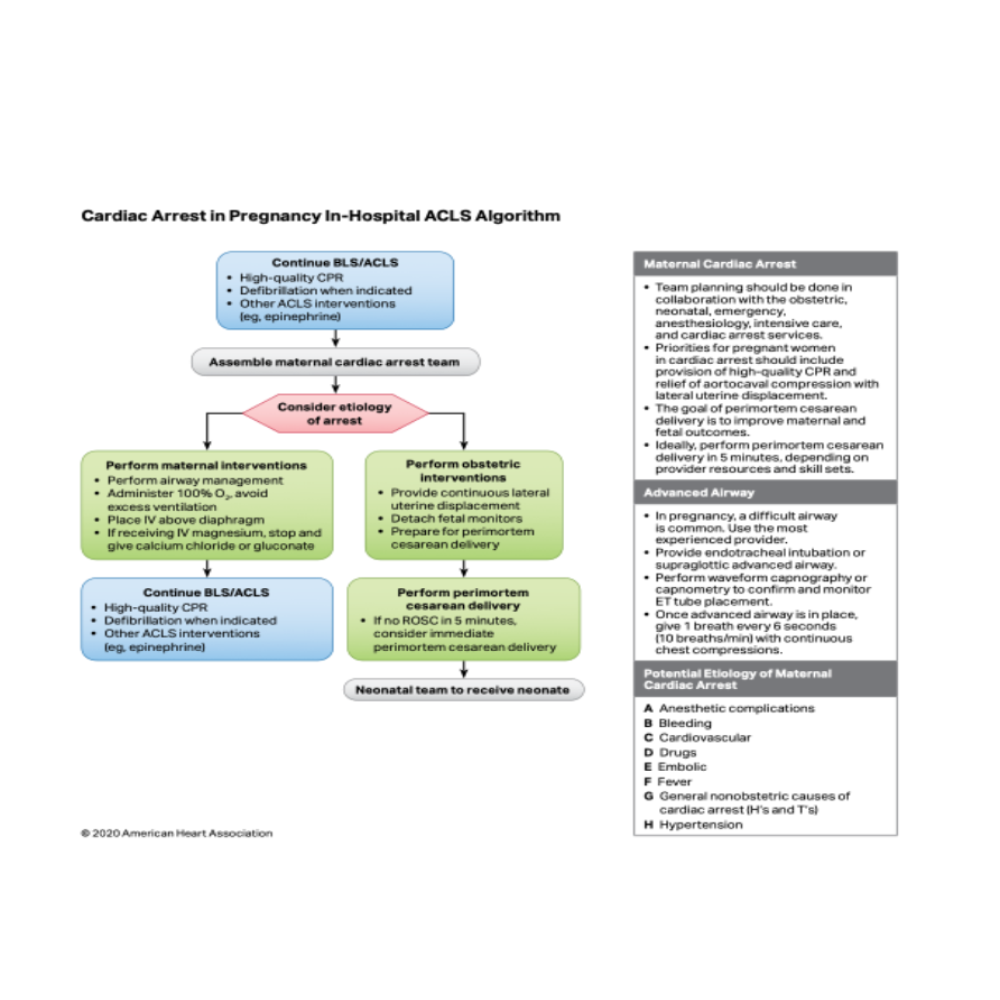
A Quick look at Maternal CPR as defined by AHA
Conclusion
In the realm of obstetric care, preparedness is key. ALSO and BLSO provide essential, evidence-based training that empowers healthcare providers to handle emergencies with confidence and precision. Whether you are part of an obstetrical team or a first responder in a rural community, these programs are vital tools in the ongoing effort to reduce maternal and neonatal morbidity and mortality. By investing in such comprehensive training, we can ensure that every birth is approached with the highest standard of emergency care—one that saves lives and promotes birth equity for all.